What Equipment Do Commercial Pressure Cleaners Actually Use?
Commercial pressure cleaners use more than a powerful water blaster. A professional setup combines pressure-cleaning machines, surface-specific attachments, https://angelomyvl297.scriblorax.com/posts/understanding-the-costs-of-pressure-cleaning-in-lake-macquarie chemical application equipment and wastewater controls. For properties in Lake Macquarie, choosing the right equipment helps remove grime, algae and salt residue without unnecessarily damaging concrete, paintwork or landscaping.
Commercial Pressure-Cleaning Machines
Professional machines typically use petrol, diesel or electric power. Many operate at approximately 2,000–4,000 PSI, although specifications vary widely. Operators adjust the working pressure to suit the surface rather than automatically using the machine’s maximum setting.
Water flow matters as much as pressure. Flow, measured in litres per minute, helps move loosened dirt and rinse large areas efficiently. Two machines with the same pressure rating can deliver noticeably different cleaning results if their flow rates differ.
Cold-Water and Hot-Water Units
Cold-water machines are commonly used for driveways, paths and general exterior cleaning. Hot-water units include a heating system that helps loosen grease and oily deposits, making them useful for suitable workshop floors, loading areas and commercial hardstands. Heat does not make every stain removable, and oily wastewater still requires appropriate collection and disposal.
Surface Cleaners, Nozzles and Extension Equipment
Attachments control how water reaches the surface. Matching the attachment to the material improves consistency and reduces the risk of damage.
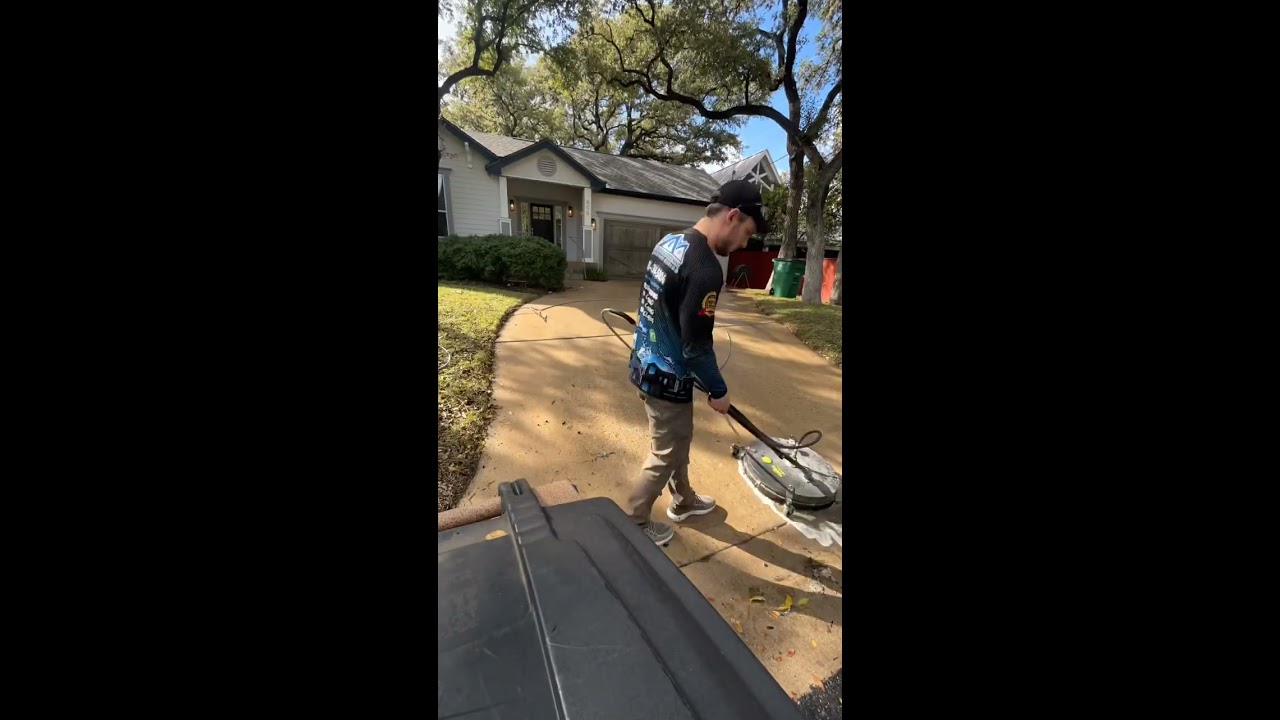
- Rotary surface cleaners: Enclosed heads with rotating spray bars clean broad, relatively flat areas such as concrete paths and car parks. They help reduce striping and overspray when operated correctly.
- Fan nozzles: Different spray angles allow operators to adjust coverage and impact. Wider patterns generally spread the force over a larger area.
- Turbo nozzles: A rotating concentrated jet tackles stubborn contamination on suitable hard surfaces, but can damage timber, coatings and weaker concrete.
- Extension lances and poles: These improve reach for some elevated areas, although access equipment may still be necessary.
Surface-cleaner size must match the machine’s flow capacity. An oversized attachment can clean poorly even when connected to a high-pressure machine.
Soft-Washing and Chemical Application Equipment
Not every exterior surface should be pressure washed. Soft-washing equipment applies compatible cleaning solutions at low pressure to help treat organic growth on suitable painted surfaces, cladding and other delicate materials.

Operators may use dedicated chemical-resistant pumps, downstream injectors, dosing equipment and separate hoses. Product selection, dilution and contact time should follow the manufacturer’s instructions and safety data sheet. Plants, metals and nearby finishes may need protection and controlled rinsing.
More pressure is not a substitute for the correct cleaning method. Fragile surfaces, deteriorated coatings and suspected asbestos-containing materials require assessment before work begins. Asbestos-containing materials must not be cleaned with high-pressure water.
Wastewater Recovery and Site Protection
Runoff management is particularly important around Lake Macquarie, where stormwater systems can carry pollutants towards local waterways. Professional equipment may include drain covers, containment berms, wet vacuums and recovery tanks to capture wash water before it enters a drain.
Recovered water may require filtration or other treatment, but filtration alone does not make it suitable for discharge. Disposal must suit the contaminants and applicable requirements. Discharging trade wastewater to the sewer may require approval from Hunter Water; a nearby sewer connection is not automatic permission.
Safety Equipment and Water Supply
Commercial crews also use pressure-rated hoses, maintained trigger guns, suitable footwear, eye protection and hearing protection where required. Barriers and warning signs help keep pedestrians away from slippery surfaces and active equipment.
Some vehicles or trailers carry buffer tanks to maintain a steady water supply when a tap cannot keep up with the machine. Appropriate backflow protection helps prevent contamination of the drinking-water supply. Elevated work may require scaffolding or an elevated work platform rather than relying on ladders.
What Should You Ask Before Booking?
Ask which method suits your surface, whether a test patch is needed, how runoff will be managed and whether the quote includes chemical treatment and final rinsing. For commercial premises, also check how the cleaner will manage pedestrian access and business operations.
The best-equipped pressure cleaner is not necessarily the one with the highest PSI rating. It is the operator who matches pressure, flow, attachments and wastewater controls to your Lake Macquarie property.
Lake Macquarie Pressure Cleaning Pros
2/396 Pacific Hwy, Belmont North NSW 2280
(02) 4011 6922